What can hail damage look like on asphalt shingles?
Hail may leave soft bruising, fresh granule loss, exposed mat, fractured ridge caps, dented vents, and matching marks on gutters or siding. Some damage is difficult to verify from the ground.
A shingle in the yard, fresh dents on a vent, granules at a downspout, or a new attic drip are reasons to document the roof after severe weather. Northeast Indiana can see hail, straight-line winds of the kind associated with derechos, tornado-season damage, and tree impact. Call (260) 276-7426 for a Fort Wayne inspection that records what happened to each slope before repair and replacement are compared.
Hail does not always punch a visible hole. Asphalt shingles can show soft bruises, fresh granule displacement, exposed mat, ridge cap fractures, dented turtle vents, and impact patterns that repeat across a slope. Wind can break shingle seals, crease tabs, pull ridge pieces loose, and expose fasteners. A driveway view can miss those details, especially on a steep two-story roof or a shaded north slope. If water is already moving indoors, first protect the leak through roof leak repair or a dry-in.
The storm inspection should photograph roof slopes, ridges, valleys, vents, pipe boots, gutters, siding marks, and interior water stains. Notes should identify whether the damage appears isolated, whether material matching is realistic, and whether the roof was already near the end of its life before the storm. Those photos also make the Fort Wayne roof repair cost ranges easier to compare against the actual scope.
Compliant storm help means documenting observed damage, preparing an itemized scope, and meeting an adjuster on site when that helps the review. It does not mean promising approval, inventing damage, or using the deductible as a sales tool. A contractor may photograph visible storm damage, prepare an itemized scope, and meet an adjuster when appropriate. Insurance coverage decisions belong to the carrier. Decline proposals that treat the deductible as a discount, and wait for the insurer's written decision before treating any work as covered. Read the written contract before signing and keep the contractor recommendation separate from your insurer's coverage decision.
If wind opened a roof plane or a limb punctured decking, the first task is stopping new water. An emergency roof repair may involve a tarp, temporary flashing, or a board-up before the permanent scope is priced. During area-wide storms, active interior water, exposed decking, unsafe roof sections, and forecast timing determine triage. Permanent repairs wait until the roof can be inspected safely.
Storm findings do not all lead to the same answer. A few lifted shingles on a workable roof may be a focused repair. Multiple damaged slopes surrounded by brittle asphalt may justify a replacement quote. Minor cosmetic marks that do not affect roof function may simply be documented and monitored. The written scope should separate temporary protection, repairable damage, replacement-level damage, and normal wear.
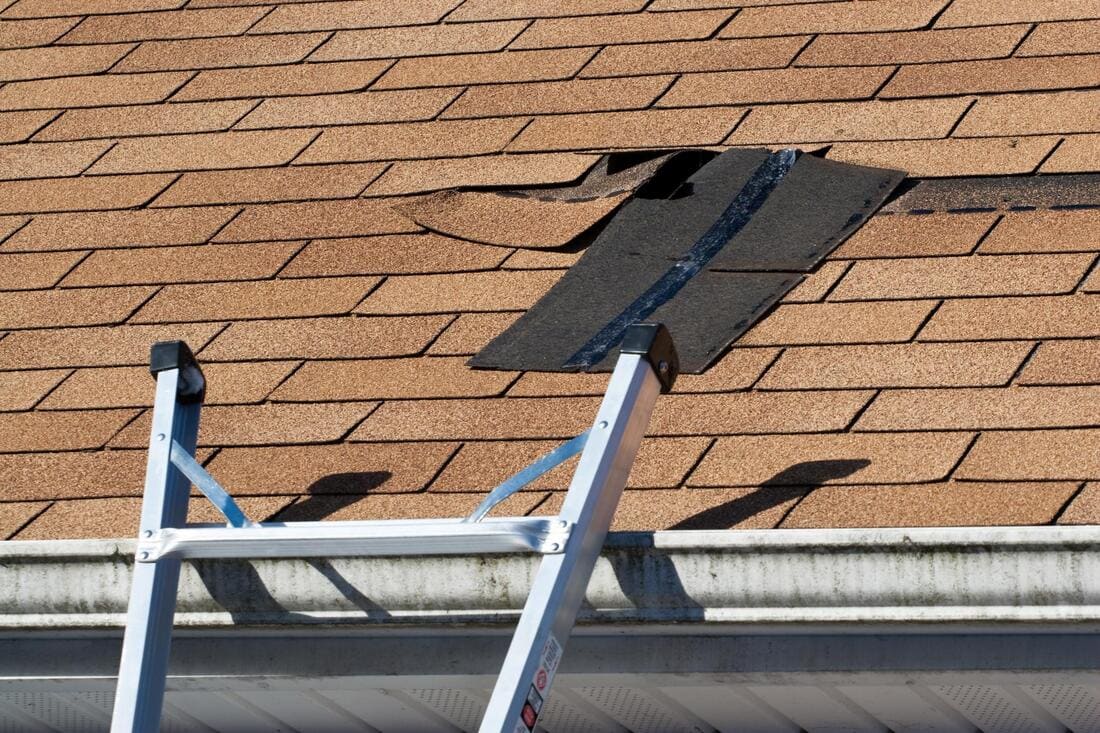
Storm tracks can be uneven across Fort Wayne, New Haven, Huntertown, Leo-Cedarville, Auburn, Columbia City, Decatur, and Bluffton. One subdivision may see hail while another gets wind and tree debris. The right process stays the same: inspect safely, photograph honestly, price the scope in writing, and avoid proposals driven by deductible discounts.
Hail may leave soft bruising, fresh granule loss, exposed mat, fractured ridge caps, dented vents, and matching marks on gutters or siding. Some damage is difficult to verify from the ground.
A contractor can share photos, measurements, and a written repair or replacement scope, and can meet the adjuster to point out observed conditions. The insurer decides coverage under the policy.
Treat that as a warning sign. Storm work should be priced honestly, and any deductible belongs in the policy and contract process. Do not sign a proposal that turns it into a discount.
Schedule when it is safe and before another storm worsens open areas. Fresh damage is easier to document, and active leaks or missing shingles may need a temporary dry-in first.
Fort Wayne Roof Pros
(260) 276-7426